


P.S.A: The next cohort of our ICF Level 1 “Foundation Diploma in Developmental Coaching” is starting at the end of July. We have one last place left. If you are keen to join the program, check out the program page and schedule an interview.
At the age of 20, I found an intriguing ad on a jobs website. The British Embassy in Bucharest was looking for someone to fill the position of “Ambassador’s Residence Manager”. The job involved coordinating a team of 5 staff, managing the day-to-day activity of the Residence (which was in part the personal home of the Ambassador and his family, and in part an events centre) and helping organise all official functions for the Embassy. I was in my second year studying Political Science, and the prospect of working at the heart of one of Europe’s most important Embassies, at a time when my birth country, Romania, was getting ready to accede to the European Union, felt irresistible. I knew it was a very long shot, but I tried my luck anyway.
I went through a gruelling hiring process, competing against 100 other candidates, passed scores of language, cognitive and ethical tests, several rounds of interviews, and ultimately, to my astonished delight, was chosen over much older and more experienced contenders. It was a twist of fate that changed my life and for which I’ll never cease to be grateful.
I had been given an incredible amount of trust, despite my age and inexperience. The Ambassador and his wife had told me they had seen something in me that made them believe I would be a good leader for the 5 long-time staff - 2 maids, one butler and a chef. While I had no idea what that ‘something’ was, I was ready to give it all I had, all while also studying full-time. It felt like the chance of a lifetime, and little did I know how much it would end up changing my life.
None of the team spoke English, but all of them knew the ins and outs of Embassy politics and had zero trust in outsiders. A few of the team had worked at the Residence since I was in primary school, and had seen many ambassadors come and go. They were understandably not at all excited to be led by a kid not much older than their own children and considered my hiring nothing but a whim from their current top boss. I later learnt they had placed bets I wouldn’t last more than 6 months.
The position of Residence Manager was new - in the past, it had been the Ambassador’s spouse who dealt with the staff and led the organising of functions at the Residence. For the first time in a long time, the current Ambassador’s partner had her own career and was not interested in dealing with state dinners and coordinating politicians’ attendance to receptions - hence a new position had been created to handle the official activity of the Residence and bridge the small local team there with the larger team at the Embassy during some of the busiest years in the institution’s history.
I was both proud to have been chosen and terrified that I had no idea what I was doing and would let them all down. Being a first-time manager of a team that had had no say in choosing me, did not trust or want me as their leader, was by far one of the most uncomfortable experiences I’d ever had.
For the first few months, I tried to win over my team by being nice. Pleasant. Polite. They responded with equal politeness, yet there was what seemed like an impenetrable wall between us. I’d get my monthly tasks from the Ambassador, hold visibility over upcoming events and host a weekly meeting where we would discuss dates, timings, seating arrangements and special needs of various guests. “Discuss” is a nice way to put it, since I was doing the talking, and they would listen to me quietly, with hardly any reaction.
When I asked for suggestions on various decisions around each event, they’d always say “whatever you wish”. I’d come to dread those meetings. Getting them to talk felt like pulling teeth. The maids seemed perpetually frightened of taking the wrong step, the butler would say yes to my suggestions and then go off and do things as he saw fit, and the chef, the most senior of them all, would go over my head to discuss with the Ambassador’s wife whenever she didn’t quite like my ideas, which was most of the time.
How can a kid lead a bunch of grown-ups? I wondered. What had my own managers seen in me that made them think I was fit to manage people twice my age? It was then that I started truly wondering what it actually means to act like a grown-up, regardless of your age.
“Observe,” the Ambassador told me when I despaired over the state of my team. “Notice what people are afraid of. Consider their history, their background, their wounds. Listen to what they are not telling you. What do they need? What might motivate them to engage with you as a partner?”
I started paying more attention. I noticed the dynamics between the five and the dynamics between all of them and the rest of the Embassy system. I noticed the way the chef always took a stab at the butler, whom she didn’t like. She kept trying to boss him around, and he constantly rebelled against her by doing things halfway through or just a little bit differently than he knew she wanted. I noticed that the maids were very good friends. One was incredibly sensitive and introverted, and the other always sought to protect her friend by speaking on her behalf. Both of them were terribly afraid of the strong-willed chef and constantly strove to appease her.
I saw how the chef herself was very good at her job. She was also an impatient, tough and very proud woman who had worked at the Embassy for decades and always felt her crucial contribution to the success of every function was not recognised enough. In fact, the whole Residence team suffered from an inferiority complex because they didn’t speak English, and so they felt intimidated by all other English-speaking staff. I noticed how the work of this team often went unnoticed because it was happening in the background. They were the ones who made complex functions run smoothly, but they were often the last to be thanked for their efforts. And that stung.
“Notice yourself,” the Ambassador’s wife advised. “How do you manage your own emotions when the pressure is high?” “How do you stay curious when you are met with resistance?” “If you had nothing to prove to anyone, who would you want to be for this team and for yourself?”
I noticed my own insecurities, particularly around my age. I got curious about my own assumptions - one of which was that you could only be taken seriously if you proved you knew more than those you had to lead. That assumption had kept me stuck because I knew I had so much less experience than my team. So how could I ever hope to be credible? But what if that assumption wasn’t true? What if credibility could be gained in other ways? By showing up with kindness and honesty, by communicating with maturity, by walking the talk or simply by making yourself useful to the team in a way that benefits everyone?
I spent time considering what it was that I brought to that team. I realised my fluent English was an asset, but only if I used it not as a weapon to intimidate the team, as others had done over time, but instead as a bridge to better communicate with other colleagues in the Embassy and to raise my team’s visibility within the institution. I could use my English to give this team a voice in the collective.
I still remember a meeting, a couple of months in and after much listening, noticing and soul-searching, when I stopped pretending those unnatural silences were ok and I consciously chose to step into the grown-up I wanted to be. I stopped avoiding the difficult conversation and spoke my truth. I looked each of my team members in the eye and said:
“I would like to address what I see as a barrier of silence between us. I know you did not choose me as your manager. I am conscious that I am very young, and you are rightfully questioning my experience and are naturally reluctant for someone like me to tell each one of you what they should do, when you have been doing your jobs beyond reproach for so many years.
You know your work so much better than I ever could. I respect your experience, your knowledge, and I have much to learn from every one of you. I would love you to feel free to make decisions, and for all of us to team up to make this Residence the most welcoming place it can be for all the guests crossing our threshold and do that in a way where everyone of us feels respected, heard and free to contribute in the best way we each can. I’d love our team to be known and recognised by our colleagues in other departments. I’d love us to enjoy working together, but for that, we need to build trust, and that cannot be demanded - it can only be earned. What can I do to earn your trust, and what do you each need so you can trust this team?”
It was my first vulnerable act of leadership. Addressing the elephant in the room. Striving to do so with humility and honesty, but with dignity too. I will never forget the silence in that last meeting before a new chapter began. It had a different quality. It was a surprised silence. A reflective silence. I felt a bit of the wall between us cracking.
It took a few more months for the wall to come fully down. I continued to notice them and notice me and wonder how an adult would respond to this - whatever ‘this’ was in any given moment.
Every time someone came to me with a complaint about someone else, and I refused to take sides or to criticise people behind their backs, a bit more of the wall came down. Every time I stepped in to move a piece of furniture with one of my colleagues in preparation for a function, instead of keeping to my office and my emails, a bit more of the wall came down. When I kept someone’s confidence around a sensitive personal issue they had, a few more bricks crumbled. When I highlighted the team’s accomplishments in front of others in the Embassy and used my voice to lift them up, the wall cracked. When I spoke my truth with honesty and kindness, refusing to shy away from emotionally taxing conversations, more of those seeds of trust took root. When I admitted I didn’t know, asked the Ambassador or his wife for advice, let myself be coached and mentored (oh, how lucky I was to have them modelling what a good mentor was!); when I encouraged people to come up with suggestions and then let them implement their ideas even when they were different from mine; when I refused to take petty comments or gestures personally and believed they were more a reflection of the other one’s insecurities - every single one of those moments grew me up a little bit more.
I spent almost four years in that job, and, to this day, it has remained one of my most transformative professional experiences because that Embassy was the place where I allowed myself to start becoming an adult. It was also a place where I learnt that being an adult has surprisingly little to do with your age, expertise, professional experience, wealth, hierarchical or political power.
In that job, I had a priceless opportunity to work in the background and learnt to both appreciate the work of people who are too often invisible, but also the gift of being able to observe without being the centre of attention yourself.
I saw many important people during official functions loosen their tongues after a couple of glasses and say or do very silly things, much removed from their public image. I learnt to take powerful people off their pedestals and saw how few political and organisational leaders are truly showing up with maturity when they let their guard down, out of the performative spotlight. I developed a sort of sobriety, an irreverence in the face of authority and power, a de-idealisation of charismatic figures that still serves me well whenever I have to deal with very senior leaders in my current work.
There I saw, for the first time, the pettiness of power plays and people’s egos, and the magic of staying generous and kind even when there’s no immediate gain from doing so. There, I learnt to value wisdom as a defining feature of adulthood and became obsessed with the question of how we might cultivate this precious quality at scale in our world.
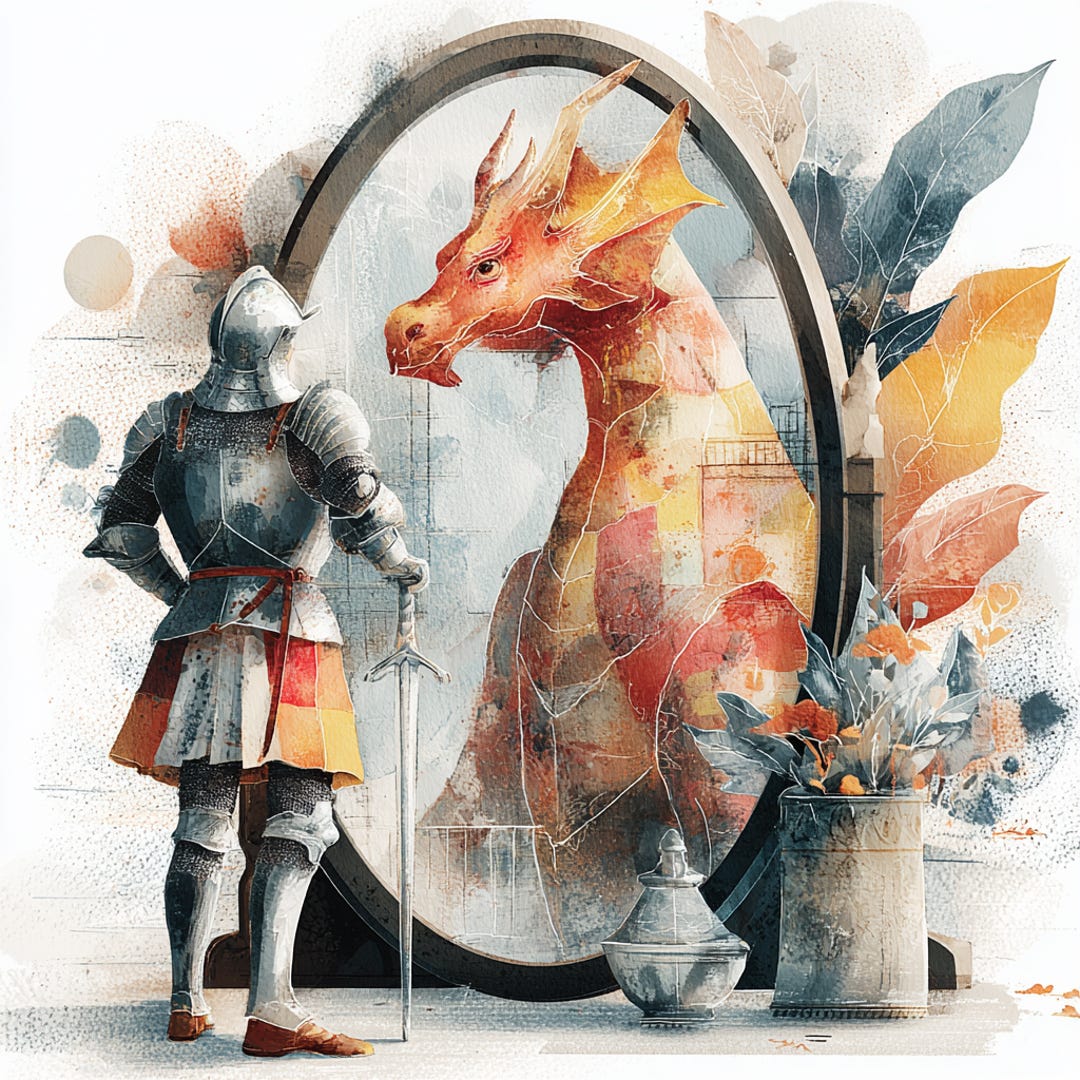
Can I start being an adult now?
I have no idea what the dream was about. I was sitting at a table with a bunch of other middle-aged adults when a teenage boy approached and asked me this question with an air of youthful, rebellious impatience. He looked at me with a bit of entitled annoyance, clearly resenting that he had to ask for permission, but obviously still compelled to do so, however reluctantly.
I looked around at the other adults, but none of them seemed to have heard the question or pay the young boy any mind. The grown-ups continued their mundane, boring chat, oblivious to this young person struggling with such an immense existential question. Who was the adult there? I heard myself starting to laugh, but there was no joy in my laughter. Still, I couldn’t stop - I laughed so hard that I woke myself up.
As I sat there staring at the ceiling, unable to fall back asleep, I wondered what the question was all about and what that uncontrollable laughter signified. Was I laughing because the question was absurd? Or because I was terrified to be invested with the authority to give another permission to grow up?
Was it because too many of us, biological adults, believe we are fully grown, while still behaving like more sophisticated versions of our insecure, petulant teenage selves? Was it because it is painful to watch our own kids in such a rush to grow up, imagining there is such a thing as ‘adulthood’ that will solve all their youthful troubles, while knowing there is no definitive threshold to maturity?
Was it because I believe the work of adulthood never ends? Or was it because I myself am still deeply unsure of what it is to be an adult and sometimes afraid I’ll reach the end of my life without an answer?
However little I know about adulthood, I do know that it must have something to do with being ready to own who you are, while also staying open to being changed. It does have something to do with paying attention, listening deeply and striving to ask more questions than spit out answers. I also suspect adulthood is about stepping back to see the bigger picture, looking for the shades of grey between the black and white, and questioning your own assumptions.
The very grown-up grown-ups might be those who are not only able to tolerate the excruciating pain of being proven wrong but who actively seek out people to challenge their views, to push them beyond the confines of what they know to be true and gift them a different perspective that can stretch their mind and heart a bit further. I also suspect growing up is about caring a bit less about what the world thinks of you and a bit more about what you might do for the world.
Imagine what the world would look like if we had more people in power questioning whether they have already earned their status as ‘adults’ and instead actively seeking to keep ‘growing up’. Imagine if more leaders asked, “How can I be an adult now?” and paused to wonder what that really means in the day-to-day. I reckon we’d live in a slightly kinder world, with fewer tantrums and a bit more wisdom…

Dive deeper
I hope you’ve enjoyed this article. If you are curious to dive more deeply into learning about Vertical Development and how it might impact your work and life, check out our online library of webinars and certification programs accredited by the International Coaching Federation. If you choose to become a paid subscriber to this Substack, you will receive complimentary access to all our webinars and a 50% discount on our long-form online programs, including our “Vertical Development Practices for Coaches”. You can also check out our new Developmental AI Lab (still in beta) - a laboratory for experimentation with ways AI can foster developmental growth.
If you are seeking to train as a developmental coach and get your first ICF credential, check out our ICF Level 1 Foundation Diploma in Developmental Coaching - next cohort starts in July 2026 (running on Americas/Apac time zones). We have one more place left. Check out the Program Page for details, and reach out to schedule an interview.
Spread the word…
If you want to do your bit to build a wiser, more conscious world, I hope you share this article with others who could benefit from the learning.
And, if you haven’t done it yet, subscribe!
Join your nerdy community, and let’s keep on staying curious and learning from each other.
Thanks Alis, I'll be passing this on to my 25 year old daughter who is stepping up into a leadership role
Quite a few years ago, a colleague asked the question, "Why are so many young people reluctant to grow up?" and it has stuck with me. I think there is a conflation of responsibility with blame. I'd love to see the blame piece excised and responsibility become conflated with agency instead. If you aren't willing to take responsibility then someone else has the power to control how your life goes. Almost the definition of what it means to be a child.